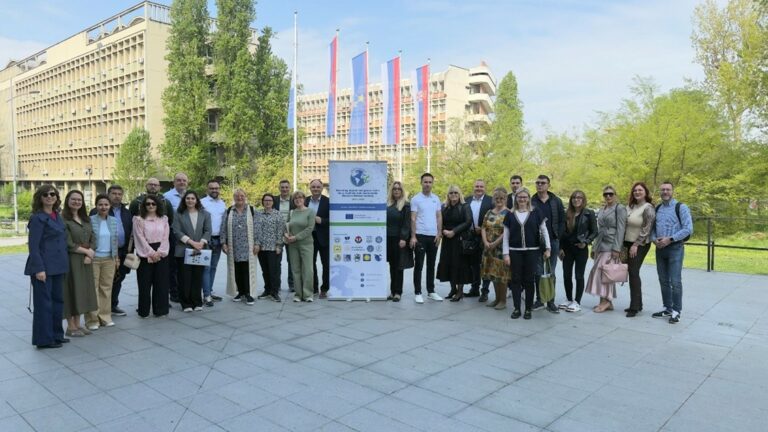


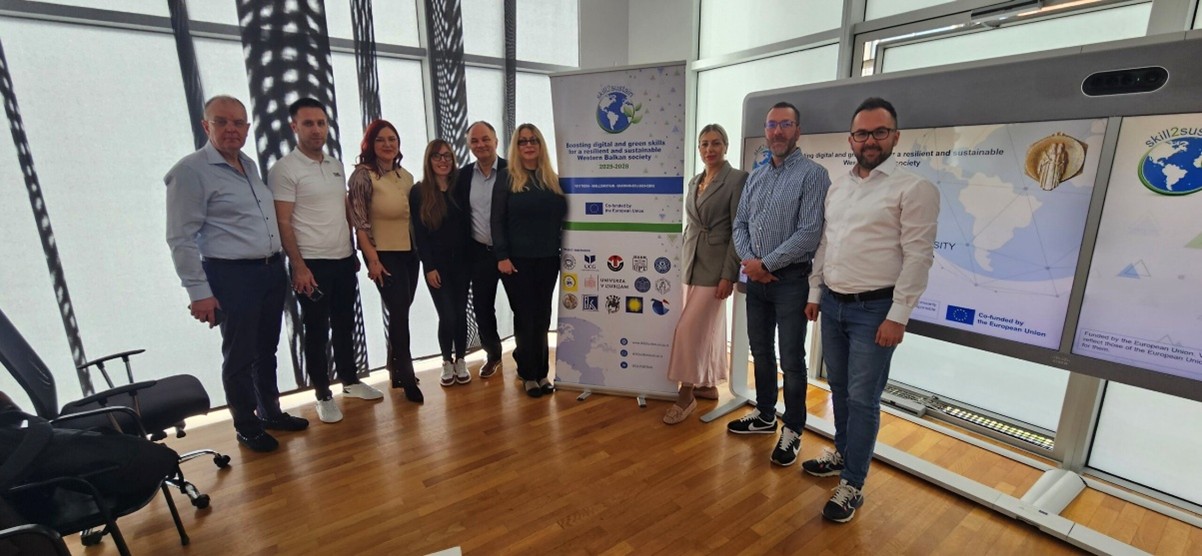
In the period from 15 to 17 April 2026, at the University of Novi Sad, Emir Pašić, representative of the Chamber of Commerce of the Federation of Bosnia and Herzegovina, together with representatives of project partners from the Western Balkans and the European Union, took part in the meetings of the SKILL2SUSTAIN Project Board.
The project consortium consists of 14 partners from 7 countries, including higher education institutions, non-governmental organizations and business and industry chambers. The partners are: University of Novi Sad, JU University of Montenegro, University of Tirana, Polytechnic University Tirana (Albania), University of Banja Luka, University of Ljubljana, University of Zagreb, Ss. Cyril and Methodius University in Skopje, Construction, Science and Practice, CEPS – Center for Business Studies Kiseljak (Bosnia and Herzegovina), Chamber of Engineers of Montenegro, Institute for Environmental and Territorial Management, Chamber of Commerce of the Federation of Bosnia and Herzegovina and the Regional Chamber of Commerce Banja Luka.
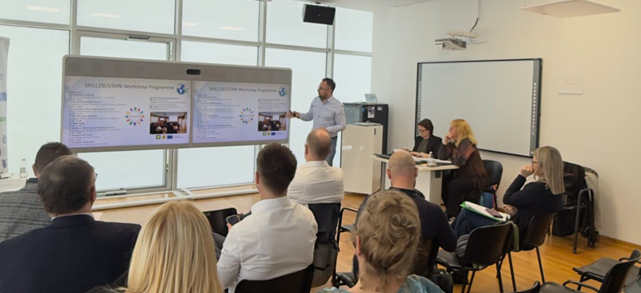
During the first two days, representatives of the Project Board participated in working meetings held in the Rectorate building, dedicated to project management.
Progress in key work packages was analyzed, including the assessment of needs for digital and green education in the academic community of the Western Balkans (WP2), the establishment of research and education centers (WP3), knowledge transfer activities and curriculum development (WP4), as well as efforts in dissemination and exploitation (WP7).
In order to support partners in fulfilling project obligations, thematic workshops on dissemination and financial reporting were organized.
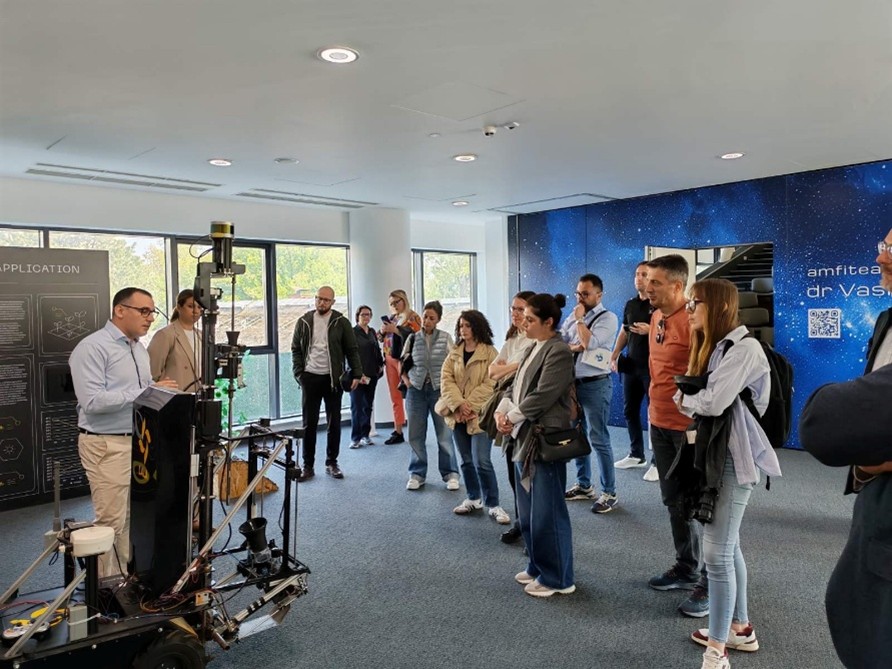
As part of the study visit, held on 16 and 17 April, participants were given the opportunity to explore the research and innovation ecosystem of the University of Novi Sad.
During the visit to the Faculty of Technical Sciences – Department of Civil Engineering and Geodesy, partners were introduced to laboratory capacities, research projects and applications in sustainable construction and resilience, as well as to the BioSense Institute, which presented activities in the field of digital agriculture and the application of artificial intelligence.
As examples of good practice, two related projects funded by the European Union – CHILD-AI and LivingLAB greenStudio 1.0 – were presented, offering insight into successful models of EU project management and financing.
The study visit concluded with a session of thematic lectures by researchers from the University of Novi Sad, covering topics such as digital tools for risk and damage assessment, climate-resilient systems, cross-border cooperation and the green transition in the construction industry.